
www.industry-australia.com
05
'26
Written on Modified on
Marine Hybrid Electric Propulsion for Cook Strait Ferries
ABB delivers integrated power and automation systems to Guangzhou Shipyard International for two rail-enabled ferries commissioned by Ferry Holdings Limited.
global.abb
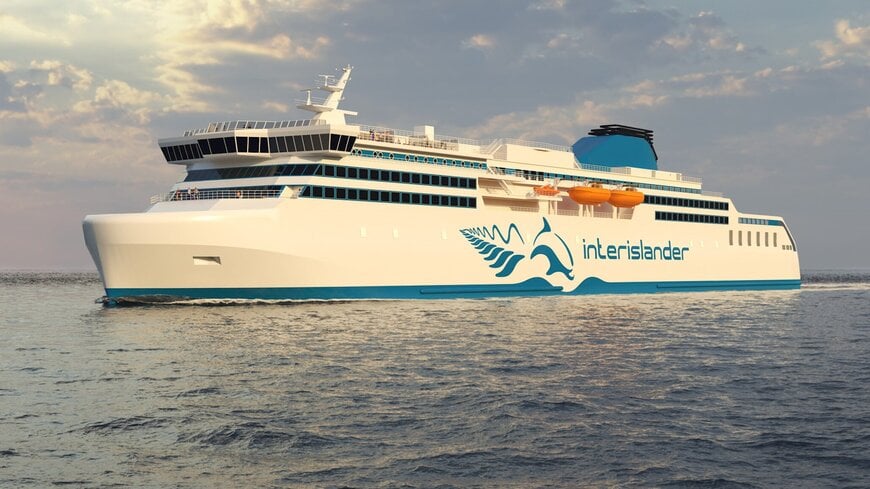
New Zealand state entity Ferry Holdings Limited has commissioned the construction of two 200-meter Ro-Pax ferries to modernize maritime transport across the 92-kilometer Wellington-Picton corridor. Built by Guangzhou Shipyard International, the vessels integrate complete marine hybrid electric propulsion and automation suites from ABB to ensure operational continuity under severe wind and tidal conditions.
Operational Context and Operational Demands
The Cook Strait connecting the North and South Islands experiences strong currents and adverse weather. The replacement vessels, designated Kupe and Cook, provide 2,400 lane meters of rail-enabled freight capacity and accommodate 1,530 passengers. To eliminate inter-island rail cargo handling steps while limiting environmental impact on marine life in the Marlborough Sounds, the vessels require high maneuverability, integrated power management, and acoustic dampening compliant with the DNV SILENT-E class notation.
Integrated Power Architecture and System Responsibilities
Guangzhou Shipyard International manages vessel construction, hull fabrication, and mechanical installations, scheduled for handover in 2029. ABB serves as the propulsion, electrical distribution, and automation contractor.
ABB supplies four main alternators, drives and motors for three bow thrusters, and two gearless, 360-degree steerable Azipod propulsion units. Replacing conventional shaftlines, rudders, and stern thrusters, the steerable propulsors enable the 28-meter-wide vessels to maintain crabbing speeds of 1 knot against 40-knot crosswinds during docking procedures in Wellington and Picton.
Energy Storage and Load Balancing Mechanisms
The power plant combines a fuel-agnostic engine arrangement with an 8.2 megawatt-hour battery energy storage system. The battery reserve provides a 10-minute spinning reserve or supports zero-emission port maneuvers, with modular architecture accommodating future expansion to 12.3 megawatt-hours and compatibility with shore connection interfaces.
Dynamic load distribution is governed by the ABB Power and Energy Management System. The automation platform interfaces with the generators, battery systems, thrusters, and auxiliary hotel loads. By actively balancing network stability, the controller prevents blackouts through dynamic spinning reserve dispatch and optimizes internal combustion engine load profiles during open-water transit.
Condition Monitoring and Predictive Asset Management
Continuous vessel telemetry is routed through the ABB Ability Remote Diagnostic System. This platform monitors electrical parameters, vibration profiles, and thermal states across all propulsion and switchboard hardware. Sensor feeds allow shore-based engineers to identify component anomalies before physical failure occurs, supporting predictive maintenance schedules.
For direct inter-island rail and road transport infrastructure, automated fault mitigation and real-time diagnostic visibility maintain scheduled timetable slots and reduce maintenance downtime across the vessels' operational lifecycle.
Edited by Evgeny Churilov, Induportals Media - Adapted by AI.
www.abb.com
