
www.industry-australia.com
02
'26
Written on Modified on
Artificial Reef Engineering for Marine Habitat Development
BHP, Recfishwest, and Pilbara Ports deploy a 300-module concrete substrate system off Port Hedland to establish biological habitats across featureless seabed terrain.
www.bhp.com
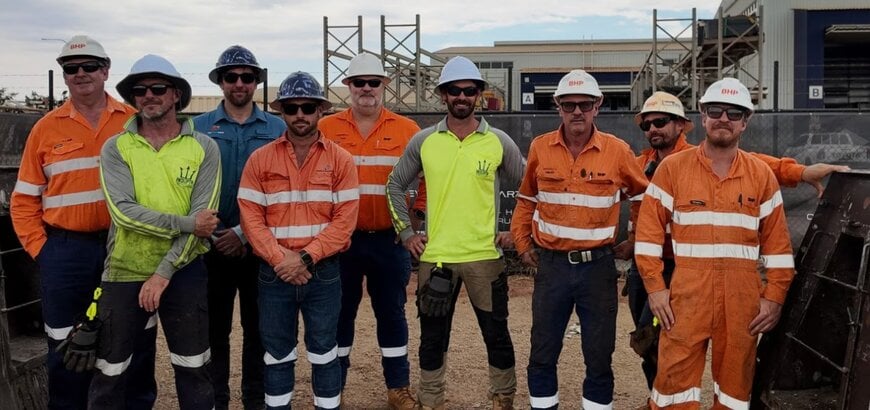
A joint marine engineering project between BHP, Recfishwest, and Pilbara Ports has entered the construction phase off the coast of Port Hedland, Western Australia. The project implements a purpose-built artificial reef infrastructure to support marine biodiversity and regional recreational fisheries management.
Partnership Roles and Project Scope
The initiative combines industrial resources, regional maritime authority oversight, and fisheries science expertise. BHP provides project funding, which began with feasibility and environmental approval studies in 2020. Pilbara Ports facilitates navigational integration and marine logistics within port waters, while Recfishwest leads site selection, habitat design verification, and monitoring parameters. The operational challenge involves deploying large-scale stable benthic structures in an open marine environment characterised by relatively featureless seabed topography.
Technical Solution and Structural Specifications
The engineered reef architecture consists of 300 cast concrete modules designed specifically for benthic stability and ecological colonization. Marine-grade concrete units provide hard substrate surfaces that promote benthic algae attachment, invertebrate settlement, and shelter for pelagic and demersal fish species. The individual structures are engineered to withstand local hydrodynamic forces, including tidal surges and bottom currents, without shifting or sinking into the soft sediment.
Deployment and Regional Marine Infrastructure
Casting of the concrete modules is taking place locally prior to marine transport and installation. The assembly will be deployed across a designated seabed footprint northwest of Port Hedland. The installation complements existing maritime infrastructure in the Pilbara region, including the Spoilbank Marina and adjacent fishing jetties. Pilbara Ports coordinates maritime safety protocols and navigational charting to ensure module placement does not interfere with commercial shipping corridors.
Operational Benefits and Marine Impact
The introduction of complex, high-relief hard substrates directly addresses the ecological limitation of low-profile sand and silt ocean floors. The three-dimensional structures induce localized upwelling of nutrient-rich currents, which initiates a trophic chain from micro-invertebrates to apex predatory species.
"The relatively featureless seafloor off Port Hedland makes this a great opportunity to create new fish habitat," stated Dr Andrew Rowland, Chief Executive Officer of Recfishwest.
The deployment establishes Australia's largest dedicated artificial reef system for recreational fisheries management. By concentrating biomass on purpose-engineered substrate, the system provides a predictable marine habitat framework while stabilizing target fish populations across Pilbara coastal waters.
Edited by Evgeny Churilov, Induportals Media - Adapted by AI.
www.bhp.com
