
www.industry-australia.com
24
'26
Written on Modified on
AI and ESG Platform Support Building Decarbonisation
Hitachi, NTT DATA and University of Technology Sydney partner to develop and validate GX solutions for energy management and smart buildings in Australia.
www.hitachi.com
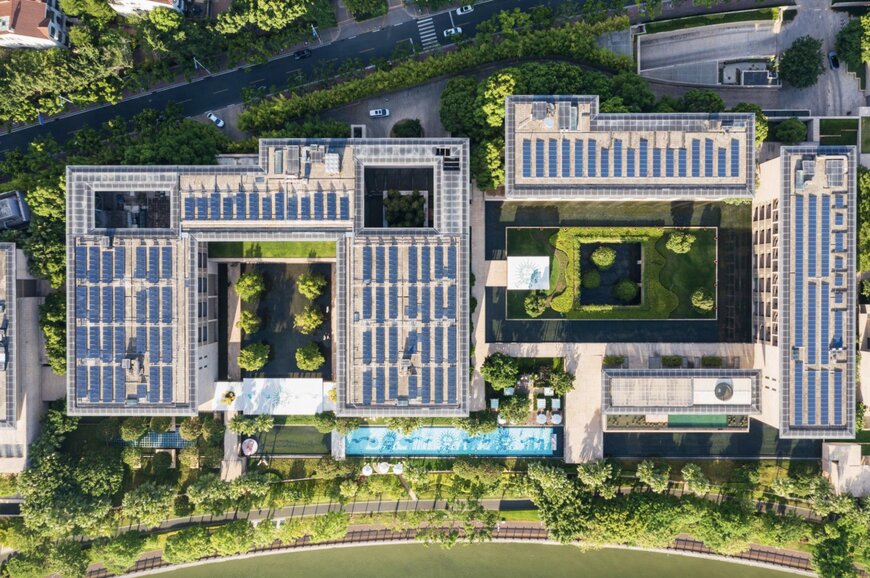
Hitachi, NTT DATA and the University of Technology Sydney (UTS) have signed a memorandum of understanding to develop Green Transformation (GX) solutions aimed at reducing emissions in Australia’s commercial building sector. The collaboration combines ESG data management with AI-driven energy optimisation to support compliance with national sustainability targets.
Living Laboratory for Real-World Validation
The partnership will use the UTS campus as a “Living Laboratory,” providing a real-world environment to test and refine digital energy management solutions. This approach enables continuous feedback from operational use, allowing technologies to be validated under realistic conditions before broader deployment.
The model supports co-development between industry, academia, and public stakeholders, with the aim of creating scalable solutions that can be applied across Australia’s building sector.
ESG Data Management for Regulatory Compliance
A central component of the initiative is the localisation of Hitachi’s EcoAssist-Enterprise platform for the Australian market. The system is designed to collect, visualise, and manage ESG-related data, particularly energy consumption metrics required under regulatory frameworks.
The platform is being adapted to align with standards such as the National Australian Built Environment Rating System (NABERS), supporting transparent and verifiable reporting. Initial deployments across UTS buildings have demonstrated its capability to monitor and manage energy usage in compliance with local requirements.
AI-Based Energy Optimisation
The collaboration integrates EcoAssist-Enterprise with NTT DATA’s HUCAST solution, which applies AI to optimise air-conditioning systems. The system predicts weather conditions and occupancy patterns, enabling real-time adjustment of cooling operations.
This dynamic control improves energy efficiency while maintaining indoor comfort levels, addressing a key challenge in building management where energy savings must be balanced with user experience.
Addressing Decarbonisation Targets
Australia’s target of reducing CO₂ emissions by 43% by 2030 places increasing pressure on large organisations to improve energy efficiency and report emissions data accurately. Mechanisms such as the Safeguard Mechanism require companies to demonstrate measurable progress in emissions reduction.
Digital platforms that combine ESG data management with real-time optimisation provide a practical pathway to meet these requirements, enabling more efficient energy use and improved reporting accuracy.
Expansion Beyond Buildings
While the initial focus is on commercial buildings, the partners plan to extend GX solutions to other sectors based on insights gained from the Living Laboratory. This includes adapting the technologies for broader industrial and infrastructure applications.
Relevance for Smart Buildings and Digital Supply Chains
The integration of ESG data platforms with AI-driven control systems reflects a broader shift toward intelligent, connected building environments. These systems enable continuous monitoring, predictive optimisation, and data-driven decision-making.
Within a digital supply chain context, such solutions support more efficient resource management and contribute to long-term sustainability goals. By combining data transparency with automated control, the partnership demonstrates how digital technologies can accelerate decarbonisation in built environments.
Edited by Romila DSilva, Induportals Editor, with AI assistance.
