
www.industry-australia.com
10
'26
Written on Modified on
Fortescue commences construction of Western Australia's largest solar farm
Large-scale photovoltaic project in Western Australia supports industrial decarbonization and mining electrification, with 671,000 panels planned for installation by 2028.
www.fortescue.com
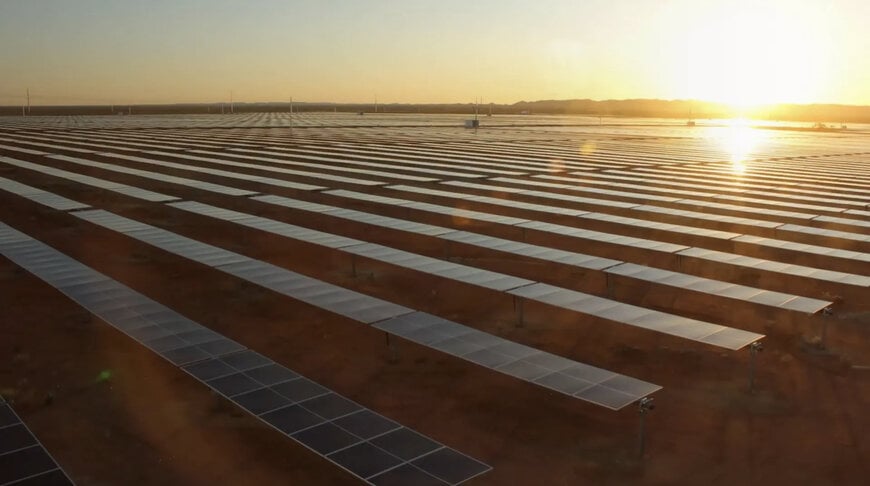
Mining operations and heavy industrial facilities increasingly rely on large-scale renewable energy projects to reduce reliance on diesel and gas-based power generation. Fortescue Ltd has begun construction of the Solomon Airport solar farm, a 440 MW photovoltaic installation in the Pilbara region of Western Australia that will supply renewable electricity to the company’s mining operations.
Once completed, the project is expected to become Western Australia’s largest solar farm and will contribute significantly to Fortescue’s strategy to reduce operational emissions under its Real Zero Target. The solar facility is scheduled for completion in 2028 and will include the installation of approximately 671,000 photovoltaic panels.
Renewable Energy for Industrial Mining Operations
The Solomon Airport solar farm is part of a broader renewable energy program designed to power mining sites across the Pilbara using locally generated solar and wind energy.
The project is expected to provide around one-third of the solar generation capacity required for Fortescue’s Real Zero Target, which aims to replace fossil fuel-based electricity used in mining operations with renewable energy sources.
Electricity produced by the solar installation will be integrated into Fortescue’s high-voltage transmission network, enabling power distribution across operational sites and rail infrastructure. Battery storage systems will also support the network, allowing the renewable generation to contribute to continuous power supply for industrial operations.
Expanding Solar Capacity Across the Pilbara
The Solomon Airport project follows construction of the Cloudbreak solar farm, a 190 MW photovoltaic facility that is currently around two-thirds complete.
Additional solar capacity is also planned at the Turner River solar project, a proposed 644 MW installation expected to begin construction later in the year. Once operational, the Solomon, Cloudbreak, and Turner River solar farms—combined with the 100 MW North Star Junction solar farm—are projected to deliver approximately 1.3 GW of total solar generation capacity.
This combined capacity would generate electricity equivalent to the annual consumption of approximately 500,000 Australian households, illustrating the scale of renewable energy infrastructure being developed to support industrial mining activities.
Integrating Wind and Transmission Infrastructure
In addition to solar power, Fortescue is expanding its renewable energy mix with wind generation. Construction is currently underway on the 133 MW Nullagine Wind Farm, which will diversify the company’s energy sources and improve overall generation stability.
The renewable projects are being connected through the Pilbara Energy Connect infrastructure program. As part of this initiative, Fortescue has already built more than 480 kilometres of high-voltage transmission lines across the Pilbara region.
Once completed, the network will extend beyond 620 kilometres, linking renewable energy assets directly to Fortescue’s mining sites, processing facilities, and rail network.
By combining large-scale solar, wind generation, battery storage, and high-voltage transmission infrastructure, the Pilbara renewable energy program represents one of the largest industrial renewable energy deployments undertaken by a heavy industry company in Australia.
www.fortescue.com
Edited by Industrial Journalist, Natania Lyngdoh.
Powered by AI.
