
www.industry-australia.com
20
'26
Written on Modified on
Fortescue Commercialises Hydrometallurgical Arsenic Leaching Process
Fortescue sells 40 tonnes of cleaned copper concentrate, demonstrating commercial viability of its low-temperature hydrometallurgical arsenic removal technology.
www.fortescue.com
Depletion of high-grade, clean copper porphyry reserves is driving global mining operators to develop complex mineral deposits characterized by elevated levels of penalty elements, most notably arsenic. High arsenic concentrations in copper concentrates—frequently exceeding Chinese import caps and global smelter blending limits—render unblended materials unmarketable, incur steep treatment penalties, or require complex pre-treatment. Conventional arsenic removal typically depends on high-temperature pyrometallurgical roasting, an energy-intensive process that generates volatile sulfur dioxide and water-soluble arsenic trioxide dusts requiring complex gas-cleaning infrastructure. Addressing these processing constraints requires selective, low-emission leaching mechanisms capable of extracting arsenic while preserving baseline copper recovery.
Hydrometallurgical Extraction and Demonstration Results
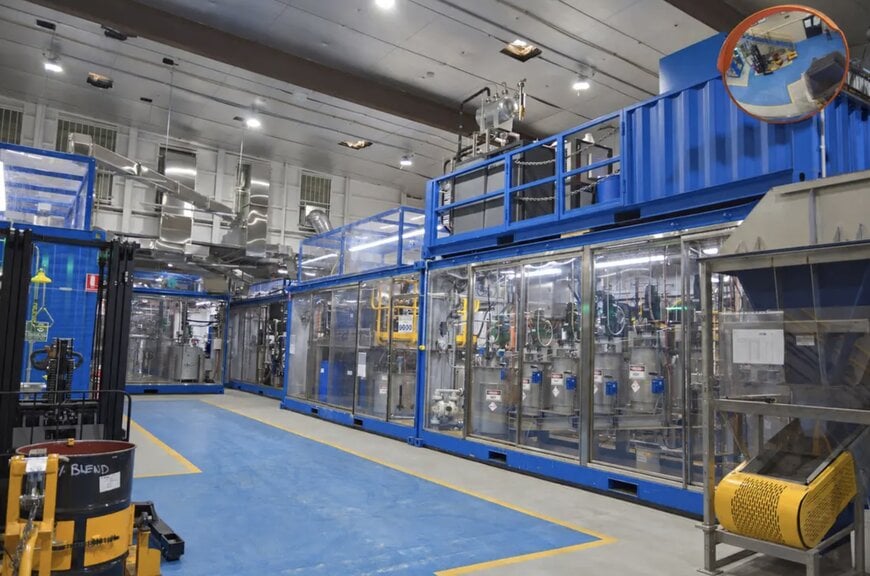
To resolve downstream smelting limitations on dirty concentrates, Fortescue completed commercial sales of over 40 tonnes of copper concentrate treated with its patented Toowong Process. Acquired by Fortescue in 2022, the technology relies on a low-temperature, low-pressure hydrometallurgical pathway to separate arsenic from complex copper minerals without requiring thermal roasting.
Process development and operational trials were conducted at Fortescue’s demonstration plant in Brisbane over four years, encompassing seven operational campaigns and exceeding 3,000 continuous operating hours. Testing demonstrated that the flowsheet consistently reduces arsenic concentrations from feedstocks carrying up to 7 percent arsenic down to below 0.3 percent—with the commercial 40-tonne batch achieving less than 0.25 percent arsenic content. Concurrently, the process preserved greater than 99.9 percent of the feed copper, demonstrating negligible metal loss to leach solutions.
Mining Inventory Optimization and Asset Economics
Eliminating arsenic upstream mitigates the operational need for complex pit blending schedules, selective mining constraints, or on-site pyrometallurgical roasting. In addition to lower process energy demand and reduced greenhouse gas emissions relative to roasting, the chemical mechanism isolates arsenic into an immobilized, stable solid residue rather than toxic, volatile off-gases.
Fortescue is progressing commercial engineering studies to optimize plant equipment sizing and lower capital and operating expenditures for full-scale deployments. The company is actively evaluating the process for its Cañariaco copper porphyry project in Peru. Integrating the leaching circuit is intended to convert sub-economic, arsenic-bearing resource blocks into marketable concentrate, lowering development risk and increasing recovered reserve inventory over the asset lifecycle.
Additional Context
This section details technical specifications and competitive benchmarking not included in the original product announcement.
Global copper smelters enforce strict penalty thresholds on arsenic, with typical penalty clauses triggering between 0.2 percent and 0.5 percent arsenic, and strict regulatory import bans—such as China’s standard of 0.5 percent arsenic by weight—restricting market access for high-impurity concentrates. Mineralogically, arsenic in primary copper deposits occurs predominantly as enargite and tennantite, mineral phases that resist conventional ambient atmospheric sulfuric acid leaching and demand aggressive oxidation or selective alkaline lixiviants. The Toowong Process operates within alkaline sulfide leaching chemistry using sodium sulfide and sodium hydroxide, selectively dissolving arsenic into soluble thioarsenate complexes while leaving copper sulfides in the solid phase as covellite or chalcocite, avoiding the copper dissolution and re-precipitation steps inherent to acidic pressure oxidation.
Within the hydrometallurgical pre-treatment sector, the Toowong Process benchmarks against competing oxidative and alkaline pathways, including Glencore Technology's Albion Process, Anglo American and CESL pressure oxidation, and direct high-pressure leaching autoclaves. While whole-concentrate pressure oxidation requires high operating temperatures between 200°C and 220°C and elevated oxygen overpressures to fix arsenic as scorodite iron arsenate, it completely oxidizes sulfides to sulfate, consuming substantial neutralization lime and producing voluminous iron precipitates. Alkaline sulfide atmospheric systems avoid the capital cost of titanium-clad autoclaves and reduce reagent consumption by targeting arsenic bonds selectively. However, commercial scaling of alkaline sulfide circuits relies on reliable elemental sulfur and sodium hydrosulfide regeneration loops alongside verifiable stabilization of arsenic residues into crystalline ferric arsenate or scorodite compounds to prevent long-term leaching in tailings storage facilities.
Edited by Romila DSilva, Induportals Editor, with AI assistance.
www.fortescue.com
