
www.industry-australia.com
13
'26
Written on Modified on
Fortescue commissions battery electric heavy-haul locomotives
14.5 MWh battery-powered locomotives replace diesel on Pilbara iron ore rail network, integrating regenerative braking and renewable power supply to cut Scope 1 emissions.
www.fortescue.com
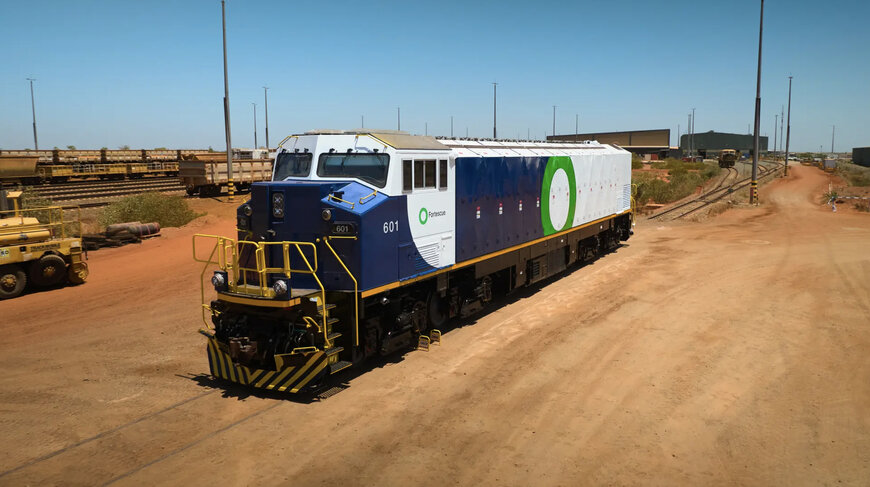
In mining logistics and heavy-haul rail operations, replacing diesel traction with electrified alternatives is a central lever for reducing Scope 1 emissions. Fortescue has begun commissioning two battery electric locomotives on its Pilbara rail network in Western Australia, marking a significant step in the decarbonisation of large-scale iron ore transport.
Delivered by Progress Rail, the locomotives are designed to eliminate approximately one million litres of diesel annually. Each unit is equipped with a 14.5 MWh onboard battery system, described by the company as the largest land-mobile battery configuration currently deployed in rail applications. Through regenerative braking, the locomotives can recover between 40% and 60% of braking energy, reducing overall energy demand and improving operational efficiency.
Integration with renewable energy infrastructure
The locomotives will operate using renewable electricity supplied through Fortescue’s Pilbara Energy Connect program. This initiative combines utility-scale solar generation, battery energy storage and high-voltage transmission infrastructure to support 24/7 operations.
More than 480 kilometres of high-voltage transmission lines have been constructed to connect renewable energy assets directly to processing facilities and the rail network. At North Star Junction, a 100 MW solar farm is already operational and supported by a 250 MWh battery energy storage system capable of delivering up to 50 MW for five hours. The storage system stabilises supply variability and supports continuous industrial loads such as rail transport.
Additional renewable capacity is under development, including the 190 MW Cloudbreak Solar Farm, which is approximately two-thirds complete. Primary approvals have been secured for the up to 644 MW Turner River Solar Farm, and a 440 MW solar installation at Solomon is planned. Together, these projects expand the renewable generation base required to replace diesel and gas across mining and rail operations.
Electrification of heavy-haul rail
Heavy-haul mining railways operate under demanding conditions, including long distances, high axle loads and continuous duty cycles. Electrifying such networks requires not only high-capacity traction batteries but also firm renewable supply and grid integration.
The 14.5 MWh capacity per locomotive supports extended operations between charging cycles, while regenerative braking improves energy efficiency during loaded and downhill segments. By coupling battery electric traction with grid-connected renewable generation and energy storage, the system aims to maintain reliability comparable to diesel fleets.
According to Fortescue, decarbonising the rail network is a key element of its broader strategy to eliminate Scope 1 and 2 emissions from Australian iron ore operations by the end of 2030 under its Climate Transition Plan.
Digital battery management and system optimisation
The locomotives are integrated with Fortescue Zero’s Elysia battery intelligence and management software. This system monitors and optimises battery performance in real time, balancing energy flows across the rail and processing network.
Advanced battery management supports lifecycle optimisation, performance monitoring and energy dispatch control, helping ensure that stored renewable power is allocated efficiently across multiple operational demands.
Broader Pilbara decarbonisation program
The commissioning of battery electric locomotives forms part of a wider electrification and renewable deployment program in the Pilbara. Recent milestones include the start of construction of the Nullagine Wind Project, expansion of electric mining equipment fleets and investment in next-generation renewable technologies.
By combining renewable generation, battery storage, high-voltage transmission and electrified heavy equipment, Fortescue is implementing a vertically integrated decarbonisation strategy tailored to large-scale mining and rail logistics.
www.fortescue.com
