
www.industry-australia.com
01
'26
Written on Modified on
Wärtsilä to supply engines for Australia’s largest power plant
The 300 MW facility will use 13 Wärtsilä 46TS-SG engines, providing flexible capacity to support renewable energy integration and grid stability.
www.wartsila.com
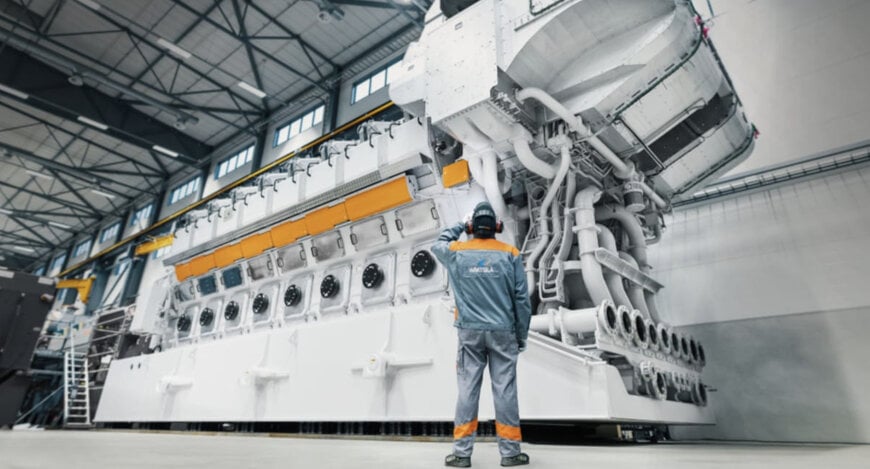
The rapid retirement of thermal baseload capacity alongside the expansion of intermittent wind and solar assets introduces severe frequency fluctuations and reserve shortfalls across modern electrical grids. To provide fast-ramping dispatchable capacity and firming power for transmission networks, technology group Wärtsilä has been selected to deliver thirteen 46TS-SG gas engines for a 300 MW reciprocating engine power plant in Australia.
Engineering Challenges in Renewable-Dominated Grids
As regional transmission organizations integrate higher volumes of variable renewable energy, synchronous inertia and spinning reserve margins decline. Sudden changes in cloud cover or wind velocity cause sharp generation imbalances, requiring fast-acting peaker plants capable of ramping to full output within minutes without incurring thermal fatigue.
Traditional combined-cycle gas turbine systems often require extended start sequences and experience reduced thermal efficiency during partial-load cycling. Furthermore, high ambient temperatures reduce air density, resulting in gas turbine output de-rating during peak summer demand. Grid operators consequently require dispatchable thermal assets that maintain consistent nameplate capacity in harsh ambient environments, offer modular sub-unit dispatch, and provide rapid dynamic response to support frequency regulation.
Thermodynamic Architecture and Engine Specifications
The installation will deploy 13 Wärtsilä 46TS-SG spark-ignited gas engine generating sets. Engineered as a next-generation large-bore reciprocating engine platform, the 46TS series features a 460 mm cylinder bore and a 580 mm piston stroke, operating at nominal speeds of 600 rpm. The mechanical architecture incorporates a two-stage turbocharging system that maintains full power output without ambient de-rating across wide temperature ranges, from -55 °C up to +55 °C, as well as at high-altitude installations.
The 46TS-SG configuration achieves an electrical efficiency rating of up to 51.3% in gas-only operation, significantly reducing specific fuel consumption and primary carbon emissions compared to open-cycle peaking gas turbines. The internal combustion combustion system utilizes high-pressure fuel-injection timing and electronic control to maintain stable combustion under varying load levels, operating with electrical heat rates as low as 7,020 kJ/kWh at rated generator terminals.
Fast-Starting Capability and Fuel Decarbonization Pathways
Operational flexibility serves as the primary engineering requirement for grid balancing. The 46TS platform supports rapid start profiles, accelerating from cold standby to grid synchronisation and full generation load in two minutes. The units handle unrestricted starts and stops without accumulating the thermal maintenance penalties common to turbomachinery, and they support ramp rates of 1% per second.
To address long-term decarbonization requirements, the combustion system handles fuel variations without physical rebuilding. The 46TS-SG platform operates natively on natural gas and is capable of running on fuel mixtures containing up to 25 volume percent hydrogen. The modular plant configuration permits sequential capacity additions as local grid balancing demands scale.
Project Execution Schedule
Wärtsilä booked the equipment order in the third quarter of 2026. Hardware deliveries of the thirteen generating sets are scheduled to begin in early 2029, with full commercial operation of the 300 MW facility planned for 2030.
Additional Context:
This section details technical specifications and competitive benchmarking not included in the original product announcement.
Grid firming and fast-response peaking capacity are traditionally delivered by three competing technology architectures: aeroderivative open-cycle gas turbines, large-bore reciprocating internal combustion engines, and battery energy storage systems.
Battery systems provide sub-second frequency response and synthetic inertia but generally remain limited to short-duration discharge windows (typically one to four hours) due to current cell capital expenditures. Aeroderivative gas turbines, such as the GE Vernova LM6000 and Siemens Energy SGT-A65, achieve rapid start sequences within five to ten minutes and high power density per footprint, but their thermal efficiency remains limited to approximately 38% to 42% in simple-cycle duty, with pronounced power degradation when ambient temperatures exceed 35 °C.
Reciprocating gas engine plants—such as those utilizing Wärtsilä 46TS or competing MAN 51/60G and INNIO Jenbacher platforms—operate at electrical efficiencies exceeding 50% across a broader operational envelope. By subdividing a 300 MW plant into thirteen discrete 23 MW generating blocks, operators can modulate capacity in 23 MW increments without suffering the steep off-design efficiency penalties associated with part-load turbine operation.
In the Australian National Electricity Market, where the expansion of rooftop solar and large-scale wind farms has driven frequent operational events characterized by low or negative minimum operational demand, fast-ramping reciprocating plants are increasingly dispatched under the Wholesale Demand Response Mechanism and Frequency Control Ancillary Services markets to provide firming capacity and system strength services.
Edited by Natania Lyngdoh, Induportals editor, with AI assistance.
www.wartsila.com
