
www.industry-australia.com
23
'26
Written on Modified on
Mobile Concrete Batching Facilities for Remote Construction Projects
Holcim is deploying transportable hybrid concrete production units to support large-scale infrastructure development across remote Australian regions by minimizing transit times.
www.holcim.com.au
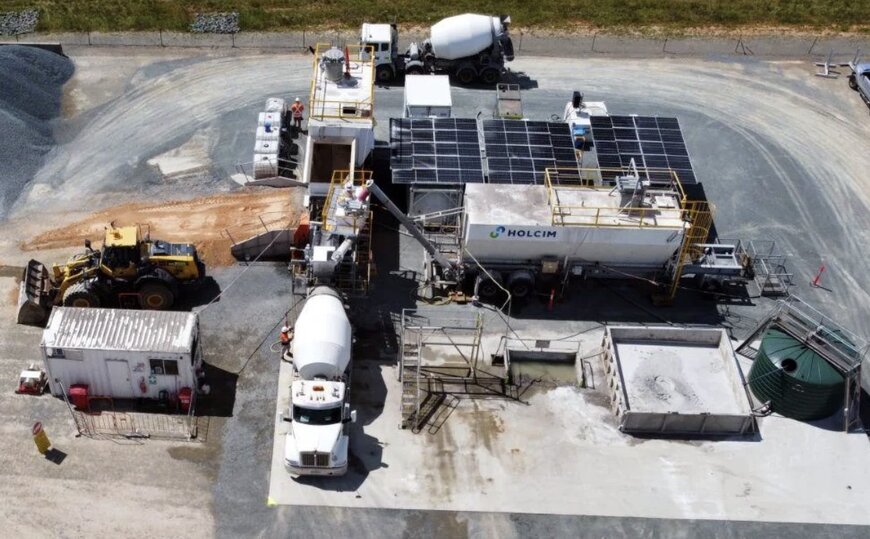
Holcim has deployed a fleet of mobile concrete batching plants to provide localized material supply for regional construction programs. This transportable production infrastructure targets high-volume civil engineering and energy transmission projects where long transit distances compromise the technical specifications and curing times of wet concrete.
Mitigating Transit Impacts in Regional Infrastructure
In expansive geographical areas such as Australia, supplying concrete to remote major projects presents logistical challenges within the construction supply chain. The short working life of wet concrete and the mechanical impacts of long-distance transit on specific technical mixes can degrade material integrity. By positioning mobile batching plants directly adjacent to project sites, the structural degradation risk is minimized. This localized production model reduces transit distances, eliminates extensive heavy vehicle traffic on regional road networks, and supports sustainable construction methods by significantly shortening the physical supply chain.
Hybrid Power and Rapid Asset Relocation
The mobile batching plants are engineered for continuous off-grid production. The primary power source for these hybrid units is a rooftop solar installation, which is supplemented by battery storage systems and backup generators to maintain process stability during high-demand cycles. Recently, Holcim executed a rapid relocation of one such plant following the completion of material supply for a high-voltage transmission line project near Gundagai. The production unit was demobilized, transported over 430 kilometers, reassembled, and commissioned at a new site within a seven-day timeframe.
Engineering and Operational Deployment
The seven-day relocation sequence required coordinated staging, encompassing demobilization, heavy transport loading, site setup, and system commissioning. Plant personnel managed the mechanical breakdown and unloading operations at both locations to limit operational downtime. "Our mobile batching plants and assets are designed for efficient mobilisation and demobilisation to ensure we can commence concrete production for our clients immediately at the new site," stated Mitch Gimm, Mobile Projects Asset Manager at Holcim. This equipment modularity allows infrastructure developers to maintain a continuous material supply across shifting operational nodes.
Additional Context
This section details technical specifications and competitive benchmarking not included in the original news release.
In the mobile concrete batching market, transportable plants are benchmarked on deployment speed, modularity, and maximum output capacity, which is typically measured in cubic meters per hour (m3/h). Platforms from manufacturers such as Liebherr (including the Mobilmix series) and Ammann offer competitive alternatives, generally outputting between 100 to 130 m3/h depending on the mixer configuration. The defining performance metric for remote mobile batching in extreme environments is the integration of autonomous or hybrid power systems to reduce diesel fuel dependency. By incorporating solar and battery storage architectures, these hybrid plants lower the overall carbon footprint of remote material production and provide a measurable mechanism for regulatory compliance on large-scale government infrastructure projects.
Edited by Aishwarya Mambet, Induportals Editor, with AI assistance.
www.holcim.com
