
www.industry-australia.com
17
'26
Written on Modified on
RTX’s Raytheon Delivers Combat-Ready NASAMS for Australian Army Air Defence
Australian configuration integrates CEA radars, mobile launchers and multiple missiles, expanding protection against aircraft, drones and cruise missiles across critical infrastructure.
www.rtx.com
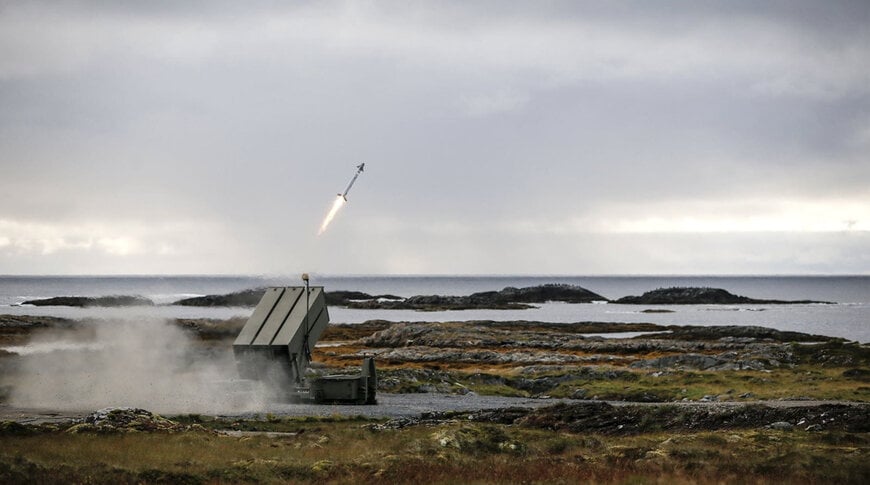
Raytheon Australia has finalized the transition of the National Advanced Surface-to-Air Missile System to combat readiness for the Australian Army, fulfilling operational objectives under the Land 19 Phase 7B project. The milestone establishes a modern ground-based air defense envelope engineered to protect personnel, deployed forward forces, and critical regional infrastructure against airborne threats.
Distributed Sensor and Command Infrastructure
The localized configuration combines distributed battle management with domestic sensor technology. The system links CEA Technologies active electronically scanned array (AESA) radars with Kongsberg Fire Distribution Centres, integrating real-time target data into a cohesive air picture. By utilizing open-architecture command structures, the network processes tracking telemetry to coordinate multi-target engagements against fixed-wing aircraft, rotorcraft, cruise missiles, and unmanned aerial systems.
Mobility Platforms and Multispectral Interception
Tactical mobility is achieved by mounting the high-mobility launcher architecture directly onto the protected Hawkei four-wheel-drive platform, ensuring rapid deployability alongside mechanized elements. The system uses a multispectral ground sensor suite alongside tiered interceptors, including the short-range AIM-9X Sidewinder, the medium-range AIM-120 AMRAAM, and the extended-range AMRAAM-ER. This multi-effector configuration allows operators to counter low-altitude tactical threats as well as stand-off strike munitions, providing adaptable inner-tier coverage for the integrated joint battlespace.
Additional Context:
This section details technical specifications and competitive benchmarking not included in the original product announcement
Within modern short-to-medium-range air defense (SHORAD/MRAD), the Australian configuration of this architecture competes directly with networked systems such as Diehl Defence IRIS-T SLM, MBDA Land Ceptor (CAMM), and Rafael SPYDER.
A defining engineering attribute of the Australian battery configuration is the replacement of standard rotating phased-array radars with fixed-face active electronically scanned array (AESA) arrays from CEA Technologies. Unlike single-panel mechanical spinning sensors that produce periodic update latencies, stationary four-panel AESA arrays provide continuous 360-degree hemispherical tracking and rapid beam steering. This sensor layout prevents track loss during aggressive maneuvering by low-radar-cross-section cruise missiles or saturated drone swarms.
In effector flexibility, the open launcher rail architecture accommodates both imaging infrared guidance (AIM-9X) and active radar homing (AMRAAM and AMRAAM-ER), achieving engagement ranges extending beyond 40 kilometers with the extended-range rocket motor. This dual-guidance capability provides resistance against electronic countermeasures compared to single-seeker paradigms like CAMM (active radar) or IRIS-T SLM (imaging infrared). However, unlike vertical launch systems such as CAMM, which execute instantaneous omnidirectional engagements without prior mechanical slewing, the vehicle-mounted launcher requires directional azimuthal orientation toward target sectors prior to launch.
Edited by Natania Lyngdoh, Induportals editor, assisted by AI.
www.rtx.com
