
www.industry-australia.com
30
'26
Written on Modified on
Challenging the myths behind energy modernisation
Energy operators often associated modernisation with disruption, replacement and risk. It’s time to bust those myths.
global.abb
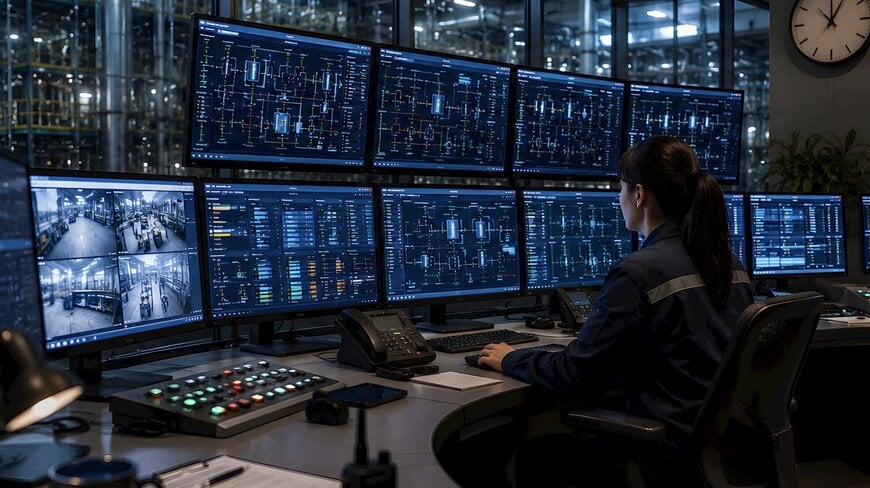
For critical infrastructure operators, avoiding disruption is essential. Yet, one of the biggest misconceptions about distributed control system/ DCS modernisation is that it has to happen all at once. In reality, this modernisation should be an ongoing process of modular improvement that fit operational needs and minimise disruption.
For Australia's energy sector, maintaining the reliability of existing plants remains a key priority. The industry continues to rely on a substantial installed base of mature assets, many of which have been operating for decades.
According to the Australian Energy Market Operator (AEMO), electricity consumption in Australia is projected to increase from approximately 180 terawatt hours (TWh) today to around 210-230 TWh by 20301. This growth is primarily driven by increasing electrification across transport (such as the rise of electric vehicles), buildings and industrial processes, alongside the rapid expansion of data centres and AI, and growing electricity demand from energy intensive industries.
As these facilities continue to play an important role in the rising demand, modernising their automation and control systems enables operators to improve reliability, strengthen cybersecurity and unlock data-driven capabilities such as predictive maintenance and AI-enabled operational optimisation without replacing core plant infrastructure.
Modernisation builds on what already works
Australia’s energy landscape is changing rapidly. Rising electricity demand and an evolving generation mix mean existing assets need to operate more flexibly, and the automation and control systems supporting them need to evolve too2.
Evolution is not something to start everything over again. For brownfield facilities, the focus should be on upgrading what needs to change while preserving infrastructure that still works. By aligning upgrades with maintenance schedules, planned shutdowns and investment cycles, operators can modernise progressively and prioritising investment where it delivers the greatest value.
That history represents significant engineering effort and investment. It also means that replacing everything simply because part of the system is reaching the end of its lifecycle rarely makes commercial or operational sense.
When operators modernize the facilities, it does not have to mean wholesale replacement. A more pragmatic approach is to evolve control systems progressively, prioritising the components that carry the greatest operational, lifecycle or cybersecurity risk while preserving infrastructure that remains fit for purpose. Testing, simulation and pre-commissioning can further reduce uncertainty before changes are introduced, helping operators modernise with greater confidence while minimising disruption to ongoing operations.
Modernisation should be shaped not only by technology, but also by how the business operates. Aligning upgrades with maintenance windows, regulatory requirements and investment priorities allow operators to modernise progressively while keeping critical assets running throughout the energy transition.
The opportunity cost of waiting
One of the most common reasons to defer modernisation is that existing systems are still functioning. When assets are performing as expected, maintaining the status quo can appear to be the lower risk option. However, this perspective overlooks another category of risk altogether.
As infrastructure ages, the challenge is not always how well it performs today, but how well it can continue to be supported tomorrow. Replacement components can become harder to source as technologies become obsolete, while control systems, software and other operating platforms may reach the end of their supported lifecycle.
The same challenge applies to people. Over time as technology evolves, engineering skills and expertise are naturally shifting towards newer systems, creating an opportunity for operators to think ahead about how knowledge and capabilities are maintained. Engineers Australia3 estimates that around 68,000 engineers will retire over the next decade, while also identifying power systems as an area where experienced engineers remain in demand. This makes workforce planning an important part of modernisation. As systems evolve, knowledge transfer and skills development can help operators keep existing assets well supported and build resilience for the future.
This is where lifecycle planning becomes important. Rather than waiting until obsolescence forces action, operators can modernise deliberately while they still have choices, addressing emerging risks in stages and preserving infrastructure that remains fit for purpose. The goal is not to replace assets simply because they are old, but to ensure they remain reliable, supportable and resilient for the role they still need to play.
Technology is only part of the equation
The engineering behind modernisation may be complex, but its success is ultimately measured by operational outcomes. This shifts the conversation from deploying new capabilities to addressing practical operational priorities, such as maintaining reliable production, managing lifecycle and cybersecurity risks, and enabling better-informed operational decisions.
Cybersecurity has become an increasingly key important consideration in modernisation decision. As operational technology environments become more connected and dependent on data and remote access, operators are reassessing legacy systems that were not designed for today’s cyber risks. For operators of Australia’s critical infrastructure, obligations under the Security of Critical Infrastructure (SOCI) Act4 have further increased the focus on identifying and managing material risks, including cyber threats. Modernisation provides an opportunity to strengthen cyber resilience and maintain secure, supportable and reliable operational technology environments while enabling the benefits of greater connectivity
Modernisation also creates the digital foundation needed to unlock advanced capabilities such as artificial intelligence (AI). By bringing together high-quality operational, engineering asset data, AI can deliver predictive insights that help optimise asset performance, improve reliability, support predictive maintenance and enable faster, better-informed operational decisions. This is particularly valuable across critical energy industries such as power generation, petrochemicals, and oil and gas, where reliability and resilience are critical, provided cybersecurity and safety risks are effectively managed.
Modernisation in practice
Australia’s changing energy landscape has reinforced the need for this measured approach to modernisation. Generating assets are increasingly being asked to operate in different ways, responding to changing demand patterns while maintaining the reliability expected of critical infrastructure.
That interconnected environment makes careful planning essential. Modernisation projects cannot simply optimise one asset in isolation – they must also consider the broader role that asset plays within the network.
A recent project at Pelican Point Power Station in South Australia demonstrates what this looks like in practice. ABB is modernising selected distributed control system controllers while preserving the broader control architecture – without replacing the entire system. The project also includes strengthening the cybersecurity and monitoring capabilities while preserving the investment that’s already been made in the broader control system.
Ultimately, successful modernisation is about balancing innovation with operational continuity. By building on proven automation systems and introducing new digital capabilities where they deliver clear value, organisations can improve reliability, resilience and performance while ensuring critical assets continue operating safely and efficiently throughout the transition.
By: Aaron Trueman, VP of ABB’s Energy Industries division, Australia
www.abb.com
